Ever felt a scratchy spot under your upper lid after a long day in soft contact lenses? One of the possible causes is a mark called a Superior Epithelial Arcuate Lesion or SEAL.
Superior Epithelial Arcuate Lesion is a slim, arc-shaped scratch hiding near the upper cornea. It’s common among soft contact lens wearers when the lens edge keeps brushing the same spot.
Here’s a quick guide on everything you need to know about SEAL.
A superior epithelial arcuate lesion is a tiny, curved scratch on the top part of your cornea—the clear “window” at the front of your eye. It often appears just under the eyelid, where a soft contact lens edge can rub the same spot each time you blink.
Most superior epithelial arcuate lesion causes trace back to how a soft contact lens interacts with the top edge of your cornea. You’ll spot superior epithelial arcuate lesions with soft contact lens (like the 1-Day Acuvue Oasys lens or the MyDay Daily Disposables) wear more often when one or more of these factors combine:
Every blink can press the lens edge against the same spot on your upper cornea. Over time that tiny rub wears away the surface cells, carving out the characteristic crescent shape.
A lens that’s too tight or made from a high-modulus (stiffer) material can press unevenly. That extra pressure boosts friction along the superior cornea and makes it easier to nick the epithelium.
Wearing lenses overnight or for long days cuts down on fresh tears and oxygen flow. Low-oxygen conditions leave the corneal surface weaker and more prone to little breaks.
When the tear film runs thin, the lens edge can grab at the cornea instead of gliding smoothly. Those dry spots create friction points that can lead to a SEAL.
Residue from poorly rinsed lenses or sensitivity to preservatives in cleaning solutions can inflame the epithelium. Inflamed cells tear more easily under even light pressure.
A superior epithelial arcuate lesion often flies under the radar. In fact, many wearers notice nothing until an eye-care checkup.
When symptoms do appear, they’re usually mild: a faint scratchy or gritty feeling under the upper lid, slightly heavier lens awareness than usual, and occasional tearing or light redness after hours of wear. Some people also report brief, hazy vision the moment they blink, then clarity returns as the tear film resets. If the cornea dries out further, you might sense a pinpoint sting that comes and goes rather than steady pain.
Because these signs can be subtle (or absent), routine follow-ups are the easiest way to spot a superior epithelial arcuate lesion before discomfort ramps up.
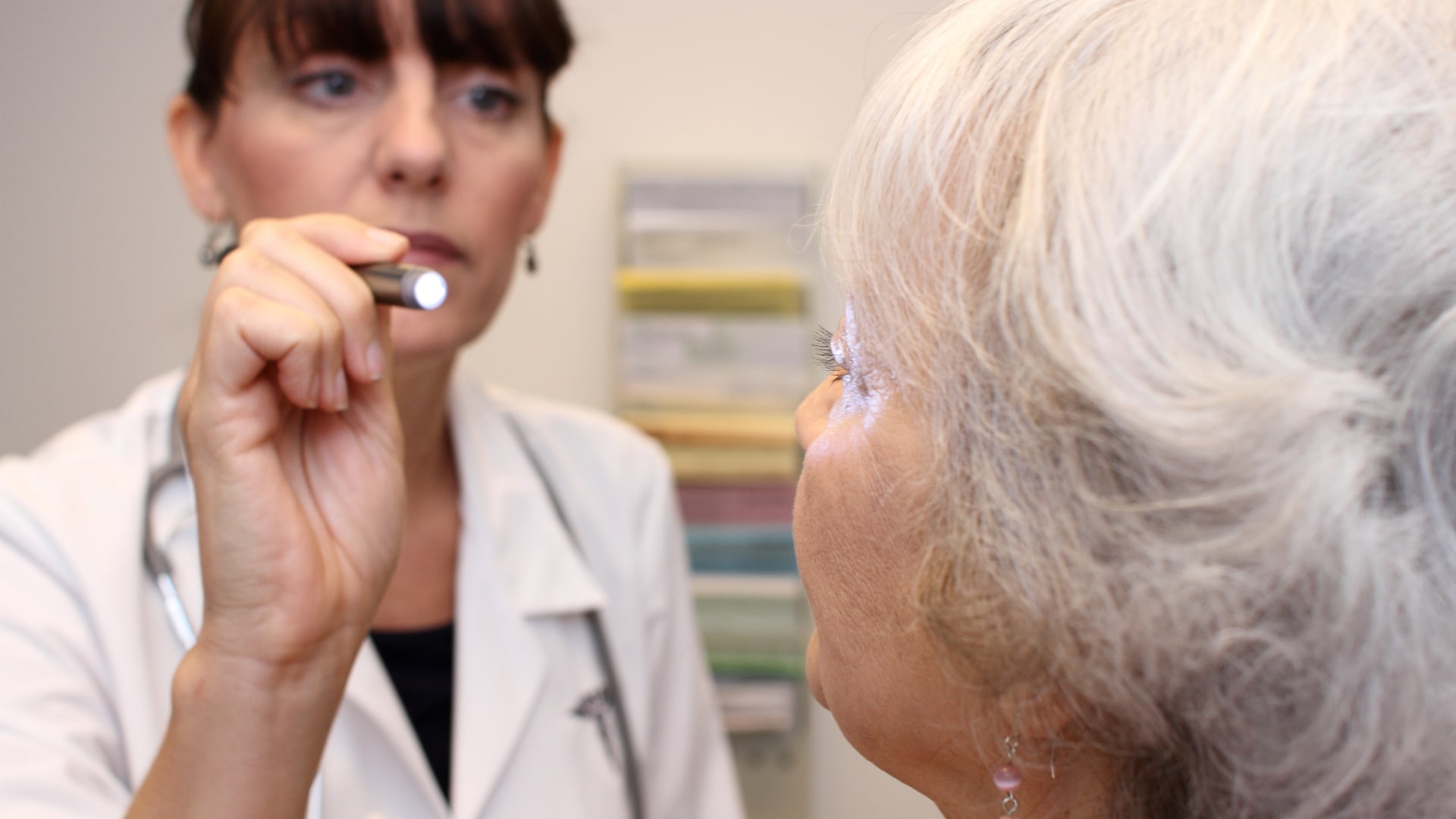
Eye-care professionals diagnose a superior epithelial arcuate lesion with a slit-lamp exam.
After a drop of fluorescein dye, the cornea is viewed under cobalt-blue light; the dye settles into the thin, crescent-shaped break near the upper limbus, making it glow bright green. The arc tends to sit just under the lid, so the examiner may ask you to look down while gently lifting the upper lid to reveal the whole lesion.
Because a SEAL can look like an early corneal ulcer, the clinician also checks for white infiltrates, discharge, or pain.
Once confirmed, superior epithelial arcuate lesion treatment starts with a simple step: stop wearing lenses immediately. Removing the mechanical friction lets the epithelium close within a few days.
Preservative-free artificial tears can keep the surface moist, and some doctors add a mild antibiotic drop as a safeguard or a short steroid course if inflammation lingers. Follow-up visits—often at 48 hours and one week—track re-epithelialization and rule out secondary infection.
After the surface is smooth again, the next task is preventing a repeat episode. A refit with a lower-modulus silicone hydrogel or a daily disposable lens reduces edge pressure; adjusting the base curve or diameter can also help.
Healthy habits start with what goes on the eye. Buying contacts from a trusted source such as Lens.com guarantees high-quality lenses, current prescriptions, and helpful support. All of which lower the odds of corneal issues like SEAL and keep your vision clear and comfortable.




How to use contact lenses
10
Contact lenses for various conditions
3
How much are contacts, where to find them, and how to get them
3
How to care for your contact lenses
12
Contact lens prescription questions
4
Types of contact lenses available
8
General contact lens questions
24
Are contact lenses safe and other safety questions
6
How do different types of contact lenses work
5
Have a question? Call us at
1-800 LENS.COM (536-7266)
Online 24/7
© 1995-2021 Lens.com. All Rights Reserved. Lens.com is a contact lens replacement company, and a direct to consumer marketer of contact lenses.
As a contact lens replacement center, we can only sell you contact lenses that you have a valid prescription for, and are wearing successfully.